Eating out gluten free
Restaurant risk is mostly not about the menu. It is about shared fryers, shared pasta water, shared grills, flour in the air, and the gap between "gluten free" as a menu label and "gluten free" as a kitchen practice.
A published study found that a substantial share of restaurant food ordered as gluten free tested positive for gluten, with pizza and pasta the worst offenders by a wide margin.
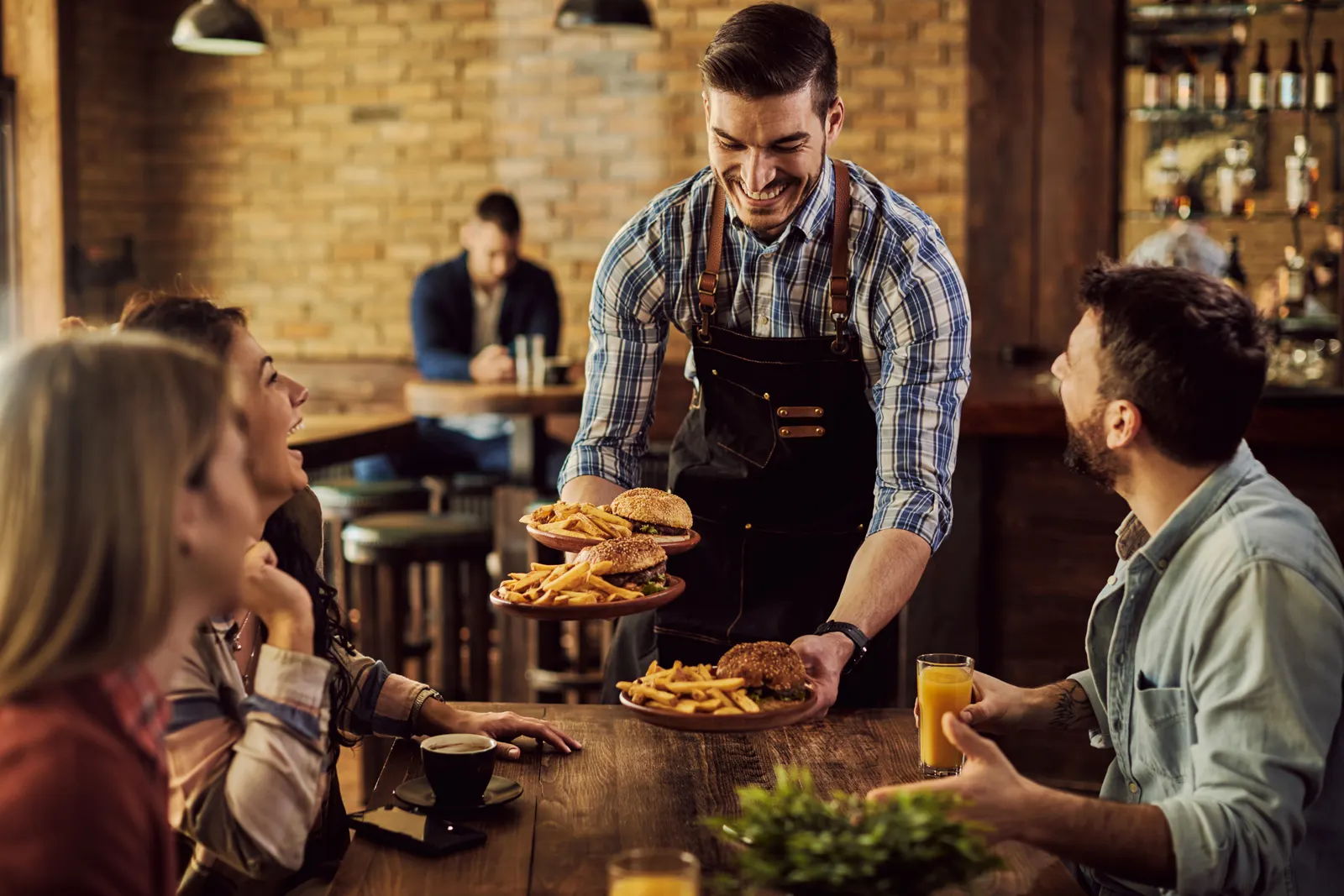
The rule: the menu tells you about ingredients, not about the kitchen
Fried food is the most reliable failure. Oil that has fried anything breaded carries gluten, and french fries cooked in that oil are not gluten free no matter what the potato started as. "Do you have a dedicated fryer?" is a more useful question than anything about the menu.
Pizza is the second. A gluten-free crust assembled on a floured bench, cut with the same wheel, and baked on the same stone as wheat pizza has been through three separate contact events. Some pizzerias handle this well with a separate prep area and a screen. Most do not, and the difference is not visible from the dining room.
It helps to be specific without being confrontational: "I have celiac disease, so this is a medical thing rather than a preference. Can you check with the kitchen whether this can be made without cross-contact?" Staff respond to "medical" very differently from "gluten free," and the phrase "cross-contact" signals that you mean the process rather than the recipe.
Timing helps more than people expect. Early service, before the fryer has been used and while the line is clean, is measurably lower risk than the middle of a rush.
Point CiCi at the barcode and get this same reasoning in about two seconds, plus the carbs and the full nutrition panel. 360,000+ packaged foods are already read and waiting.
At a glance
Sorted by what the answer actually is, rather than alphabetically — because the useful question in a shop is “which pile is this in.”
⛔ Contains gluten
- Shared fryer
The most common single point of failure. Applies to fries, chips and anything battered.
- Shared pasta water
Gluten dissolves into the water and transfers.
⚠️ Depends — check the label
- Gluten-free pizza in a wheat pizzeria
Flour dust, shared bench, shared cutter, shared stone. Ask about all four.
- Grilled meat and fish, plain
Usually fine; the marinade and the grill surface are the questions.
- Salad without croutons
Removing croutons from a salad that had them does not remove the gluten. Ask for it made fresh.
- Corn tortillas at a taqueria
Naturally gluten free, but often warmed on the same surface as flour tortillas.
- Sushi
Soy sauce, imitation crab, tempura crunch and eel sauce all carry gluten.
- Breakfast eggs
Pancake batter on a shared griddle is a real route; some kitchens add batter to omelettes.
✓ Gluten free
- Dedicated gluten-free kitchen
The only setup where cross-contact is structurally impossible.
Common questions
What should I ask a restaurant about gluten?
Three questions cover most of the risk: is there a dedicated fryer, is there a separate prep surface and separate utensils for gluten-free orders, and is gluten-free pasta cooked in fresh water. Saying "I have celiac disease" rather than "I eat gluten free" changes how kitchens respond.
Are french fries gluten free?
The potato is, but the oil usually is not. A fryer shared with breaded food carries gluten into everything cooked in it. Some fries are also coated with a wheat-containing batter for crispness before freezing.
Can I trust a restaurant gluten-free menu?
A gluten-free menu tells you the recipe contains no gluten ingredients. It says nothing about shared equipment, and testing studies have found a meaningful share of restaurant food ordered as gluten free contains detectable gluten, concentrated in pizza and pasta. Treat the menu as the start of the conversation rather than the end of it.
Reading a page is fine. Standing in the aisle is the hard part.
This site answers the question you knew to ask. The app answers the one you didn't: the barley malt in a rice cereal, the wheat starch in a gummy. Scan the barcode, or photograph the panel when the barcode isn't in any database, and CiCi shows which words on the label produced the answer.
- 360,000+ packaged foods already read. Ingredient statement, allergen declaration and nutrition panel, each one assessed by the same rules you can see working on this page, so most scans are an instant answer rather than a lookup.
- Unlimited scanning, about two seconds an answer. Fig and Spoonful both cut you off at five scans a month.
- Carbs and the full nutrition panel on every scan. Total and net carbohydrate with the arithmetic shown. For the roughly 6% of people with type 1 diabetes who have coeliac disease too, that is two apps collapsed into one.
- Your glutening log. Record a reaction and CiCi shows what those days had in common. It counts overlaps and never tells you what caused it.
- Saved products. The regular shop in one place, so next week is not a re-scan of the same forty items.
- Scanning happens on your device. The lookup carries no user id at all. Signed in, your own history is kept for you and nobody else — never sold, never sent to an analytics service.
14 days free, then $29.99 a year. Cheaper than Fig, and it does what three separate apps do. This website stays free forever either way: every answer on it, permanently, with no account.